Association for the promotionof the Ligurian language
The Council for Ligurian Linguistic Heritage (Conseggio pe-o patrimònio linguistico ligure) is an association committed to the study and promotion of Liguria’s linguistic heritage – from the Roya Valley to the Magra river, from Genoa to the Oltregiogo, from the Tabarkin communities to Bonifacio – through scientific research, outreach activities, and public initiatives.
Membership is voluntary and open to all. You can contact us at [email protected].
Latest news
Wednesday, January 14, 2026
Translation of a Topolino Story into Genoese
On the occasion of the National Day of Dialects and Local Languages, held on 17 January, issue no. 3660 of Topolino features, in four different Italian regions, a translation into the respective local idiom of the story Paperino lucidatore a domicilio, written and scripted by Vito Stabile and illustrated by Francesco D’Ippolito. The initiative is part of a Panini Comics project aimed at promoting Italy’s linguistic diversity, launched last year and coordinated by Professor Riccardo Regis of the University of Turin.
Thanks to the work of our member Stefano Lusito, the story has also been rendered into Genoese and is accompanied by a short introductory essay outlining the position of Genoese within the Ligurian varieties, the criteria adopted for Genoese spelling and reading, and the main choices made in the translation.
This is the first “official” Genoese adaptation of a Disney comic (and, more broadly, of a mass-market comic), and it symbolically opens the door to new and more structured projects aimed at promoting the language through elements of popular culture.
Wednesday, November 5, 2025
13th National “Salva la tua lingua locale” Award
Two volumes from the Zimme de braxa series, published by Editrice Zona under the auspices of the Conseggio pe-o patrimònio linguistico ligure, were honored at the thirteenth edition of the National “Salva la tua lingua locale” (Save your local language) Award, organized by the Italian National Pro Loco Union and the Eugenio Montale International Center. Gh’é o vento ch’o mescia by Paolo Besagno won joint first place in the Published Poetry category, while Ei foe déi ferguò by Roberto Benso was a finalist in the same category.
The award ceremony will take place on December 5, 2025 in Rome, in the Protomoteca Hall on the Capitoline Hill.
With these recognitions, the series confirms its role as a key reference point for the promotion of the Ligurian language and literature.
Sunday, August 3, 2025
New titles in the “Zimme de braxa” series
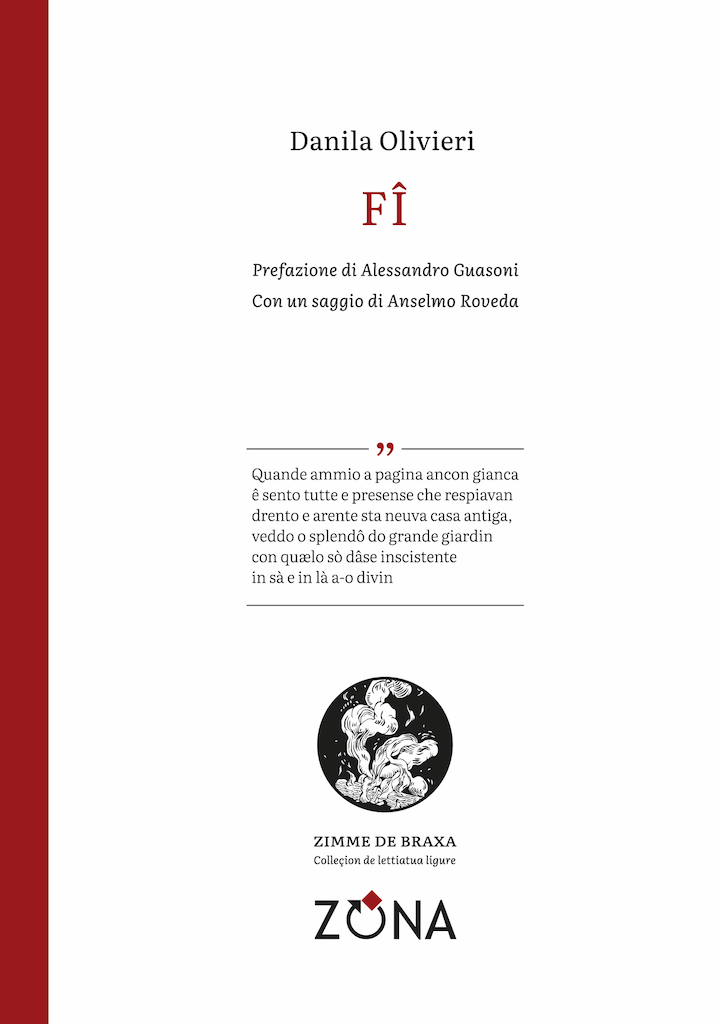
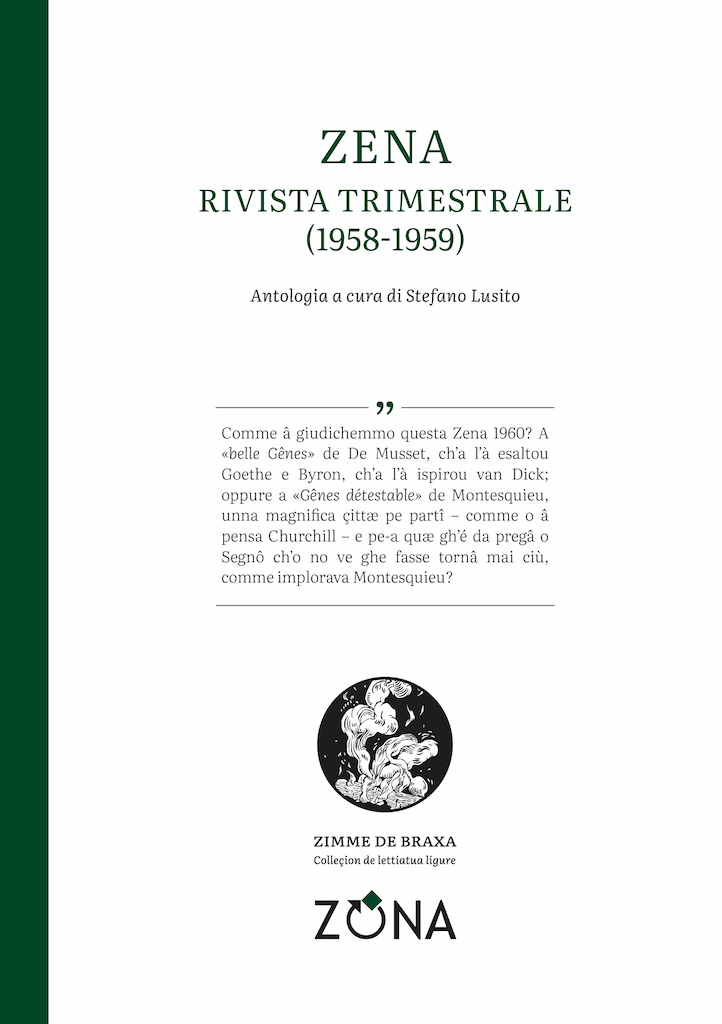
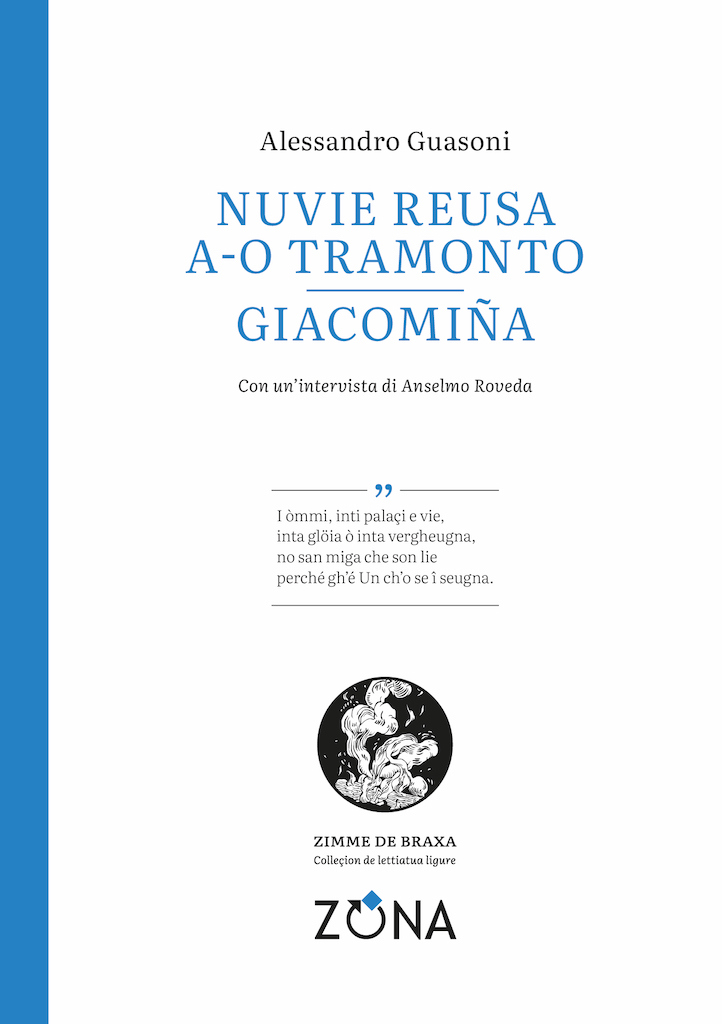
The literature series Zimme de braxa – originally launched in November 2023 – celebrated the publication of its first twelve volumes this spring. The initial volumes had been dedicated to the 18th-century theatre of Stefano De Franchi (1. Ro mêgo per força), the Savonese fables of Giuseppe Cava (2. Föe moderne), and the poetry in the dialect of Carrosio by Roberto Benso (3. Ei fóe dei ferguò). To these, the series has now added an anthology of 20th-century journalistic prose (5. Zena, rivista trimestrale 1958–1959), plays (6. Nuvie reusa a-o tramonto / Giacomiña) and short fiction (10. Conti curti) by Alessandro Guasoni, the complete poetic works in volume of Plinio Guidoni (11. A stissa ch’a ciòcca into veuo. Poexie 1969–1990), an anthology of songs and literature of the Resistance in Liguria (12. Sotta à chi tocca!), and collections by contemporary poets such as Danila Olivieri (4. Fî), Andreina Solari (8. Penscëi mai diti), Anselmo Roveda (7. Abrexê do çê), and Paolo Besagno (9. Gh’é o vento ch’o mescia). All volumes, as is customary in this series, are accompanied by appendices exploring the literary, historical, and linguistic dimensions of literature in Ligurian.
The 22nd edition of the Ischitella–Pietro Giannone Prize, one of the most prestigious competitions for an unpublished poetry collection in the languages of Italy, includes among its winners our member Anselmo Roveda, who was awarded second place for his Genoese collection Santacroxe de l’ascoso sentî (“Abecedary of hidden feelings”). First place went to Grazia Scuderi, with the Sicilian collection Primintiu (“First fruits”), while third place was awarded to Andreina Trusgnach for Med razpoki (“Between the folds”), written in the Slovene dialect of the Natisone Valleys (Province of Udine). In over twenty years of the Prize’s history, this is the first time a Ligurian poet has ranked among the winners. This year’s twelve finalists also included two other Ligurian poets: our member Alessandro Guasoni – also honorary president of the Council – with Tutta a vitta d’azzardo ò zugou (“I’ve gambled my whole life”) in Genoese, and Amilcare Mario Grassi, with Dorzòe de càn (“Dog’s tenderness”) in the dialect of La Spezia. A selection of poems by all three Ligurian authors is published in the issue no. 114–115 of the journal «Periferie».
Wednesday, April 2, 2025
Proceedings of the “International conference on studies and reflections on the linguistic heritage of the Intemelio region”
The proceedings of the “International conference on studies and reflections on the linguistic heritage of the Intemelio region” were published in March. The conference was held in Ventimiglia on October 5, 2024, and was organized by the Académie des langues dialectales (Monaco), the Cumpagnia d'i Ventemigliusi (Ventimiglia) and the Conseggio pe-o patrimònio linguistico ligure (Genoa). The proceedings, edited by Stefano Lusito, can be purchased on the website of the Académie des langues dialectales for 20€.
Here is the summary:
Claude Passet, Premessa. – Marco Scullino, Preambolo. – Stefano Lusito, Presentazione. – Claude Passet, Lo studio scientifico del monegasco : inventario e progetti. – Alberto Sismondini, La «Cumpagnia d’i Ventemigliusi» dalla «Barma Grande» a «Intemelion» : verso i cento anni di studi sui dialetti dell’area intemelia. – Werner Forner, Una classe nominale non antica nei dialetti intemeli (e altrove). – Dalila Dipino, Lorenzo Filipponio, Davide Garassino, Ai confini della Liguria occidentale: opportunità e limiti della ricerca sul campo. – Andrea Capano, Un possibile arcaismo fonetico in ventimigliese: sugli esiti -[b]- da -P- e -[br]- da –PR–. – Roberto Moriani, Il lessico pastorale brigasco nella toponomastica delle Alpi liguri. – Sylvie Leporati, Isabelle Albanese, Insegnare e trasmettere il monegasco, dalla scuola ai corsi per adulti. – Rita Zanolla, Insegnare il dialetto a Ventimiglia? Uno sguardo tra passato e futuro. – Stefano Lusito, Il caso del monegasco fra prerogative istituzionali, normazione linguistica e didattica : un possibile modello per le parlate liguri ? – Giorgio Oddone, Le parlate liguri : segno di identità, dalla provincia al mondo.
 Council for